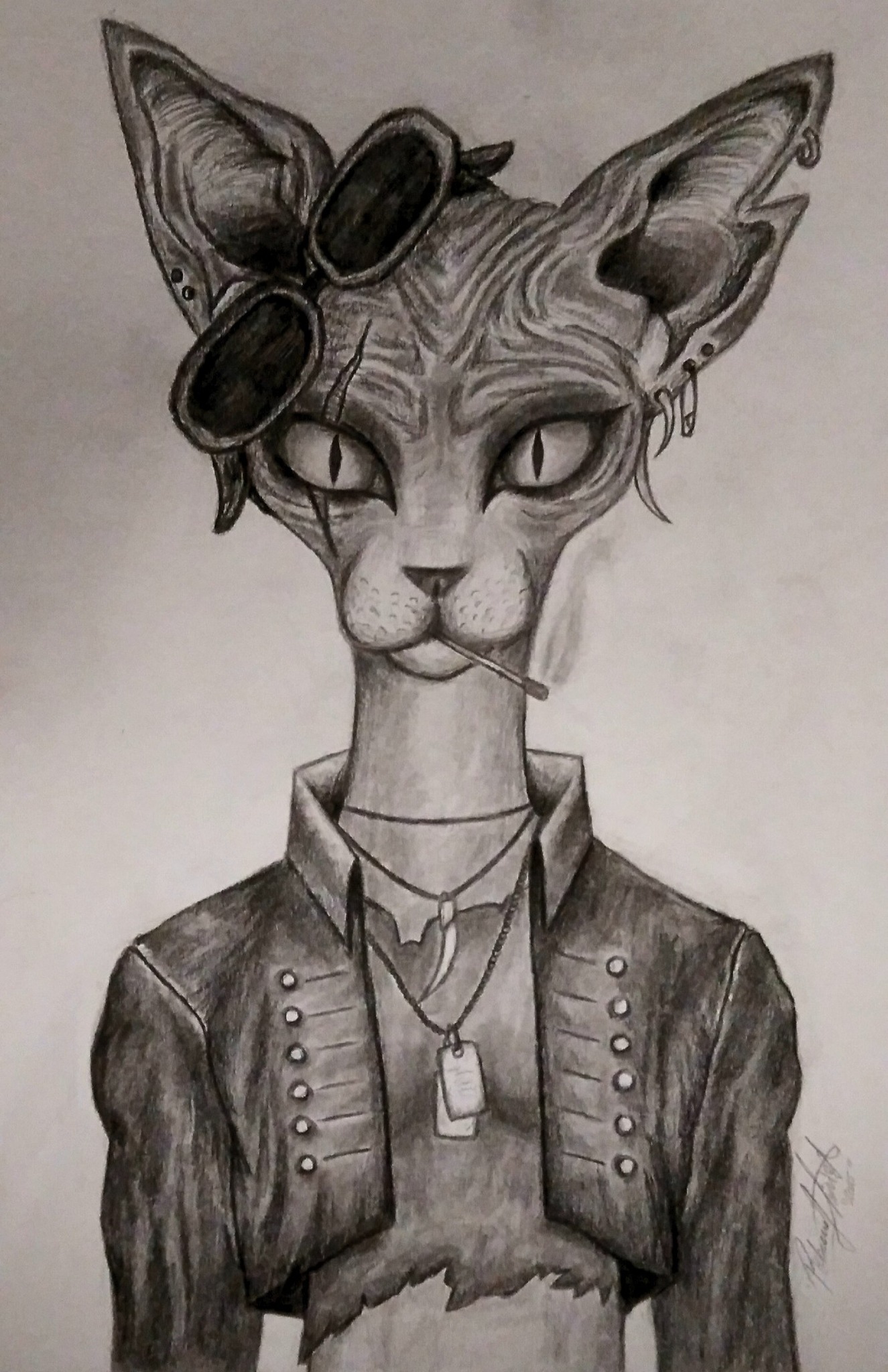
The Dark Space: A Conversation with Rebecca Hinish
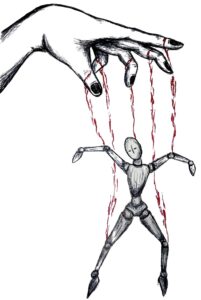
For Rebecca Hinish, creation doesn’t arrive in fragments. It arrives whole.
“When something starts to form,” she explains, “I would describe it as a whole scene.” Not an idea waiting to be built, but something already in motion. Worlds, characters, and atmosphere come through at once, unfolding like “a running mini movie inside my mind’s eye.”
Sometimes a character appears first, demanding to be drawn before its story reveals itself. But more often, everything comes together at once, fully realized before it’s ever put to paper.
Her role isn’t to construct it. It’s to capture it.
That immediacy defines her process. Each piece exists in full before she begins, and the act of creation becomes something closer to transcription than invention. “I liken it to creating on a held breath,” she says. “The piece just feels done, like the breath has run out.” There’s no overworking, no stretching an idea beyond what it is. When the breath ends, so does the piece.
And then it’s released.
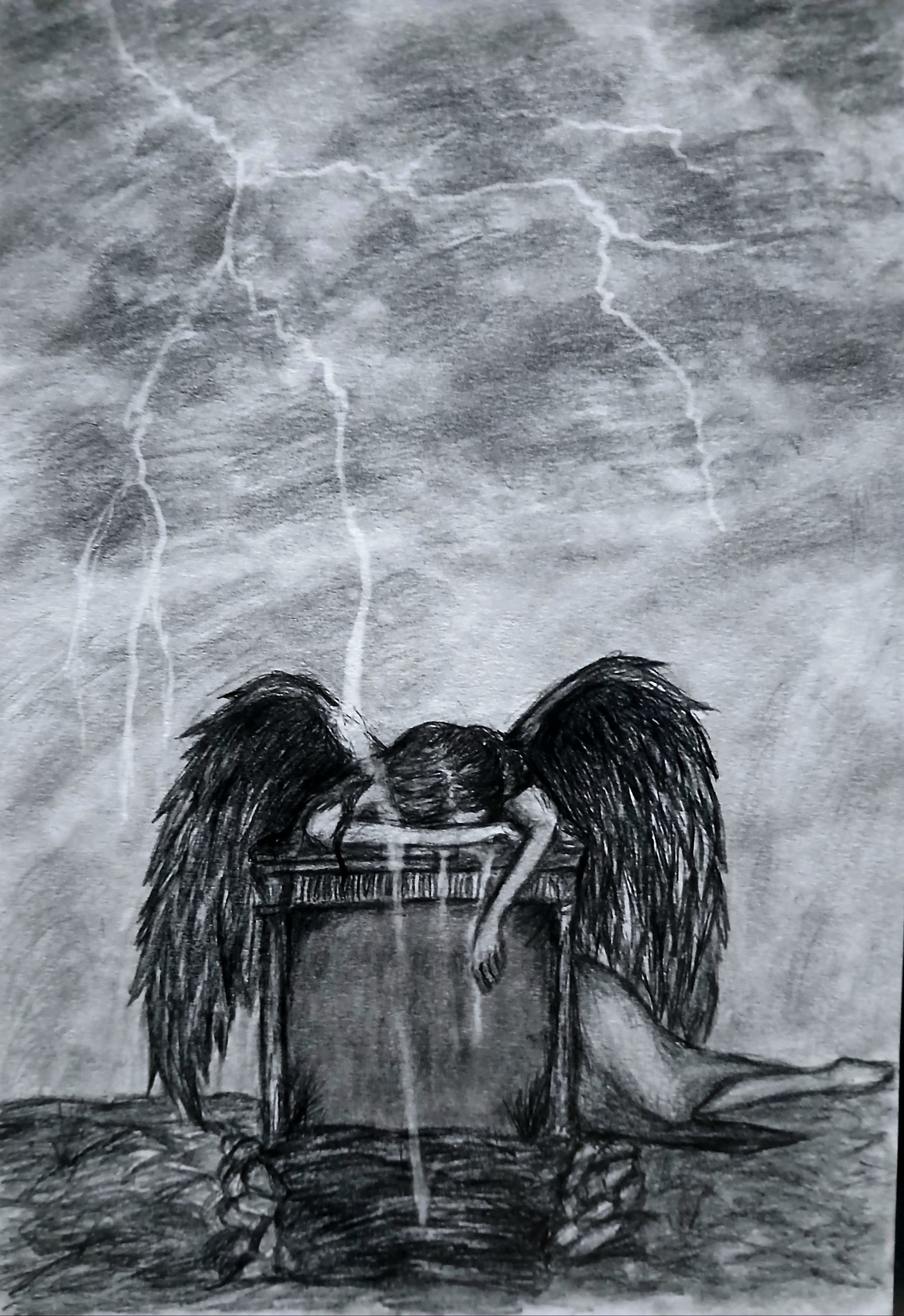
THE DARK SPACE
Hinish’s work occupies dark, often unsettling spaces, but not out of curiosity or exploration. She isn’t searching those depths. She already knows them.
“I would like to say I am not exploring those spaces but shedding light on them,” she says. These aren’t imagined voids, but reflections of lived experience, translated into something visceral. Even her more straightforward horror carries underlying layers, fragments of reality embedded beneath the surface.
“There is no casual exploration; merely pulling your hand into the dark and seeing how long you can hold in your screams once you find what is lurking there.”
Her work doesn’t guide the audience out of that darkness. It places them inside it, recreating the sensation with enough precision that recognition sets in.
And with that recognition, something unexpected follows. “What has surprised me most. is that despite how abysmal things can get. there is still a deeply ingrained will to live.”
Even in the darkest spaces, something resists.
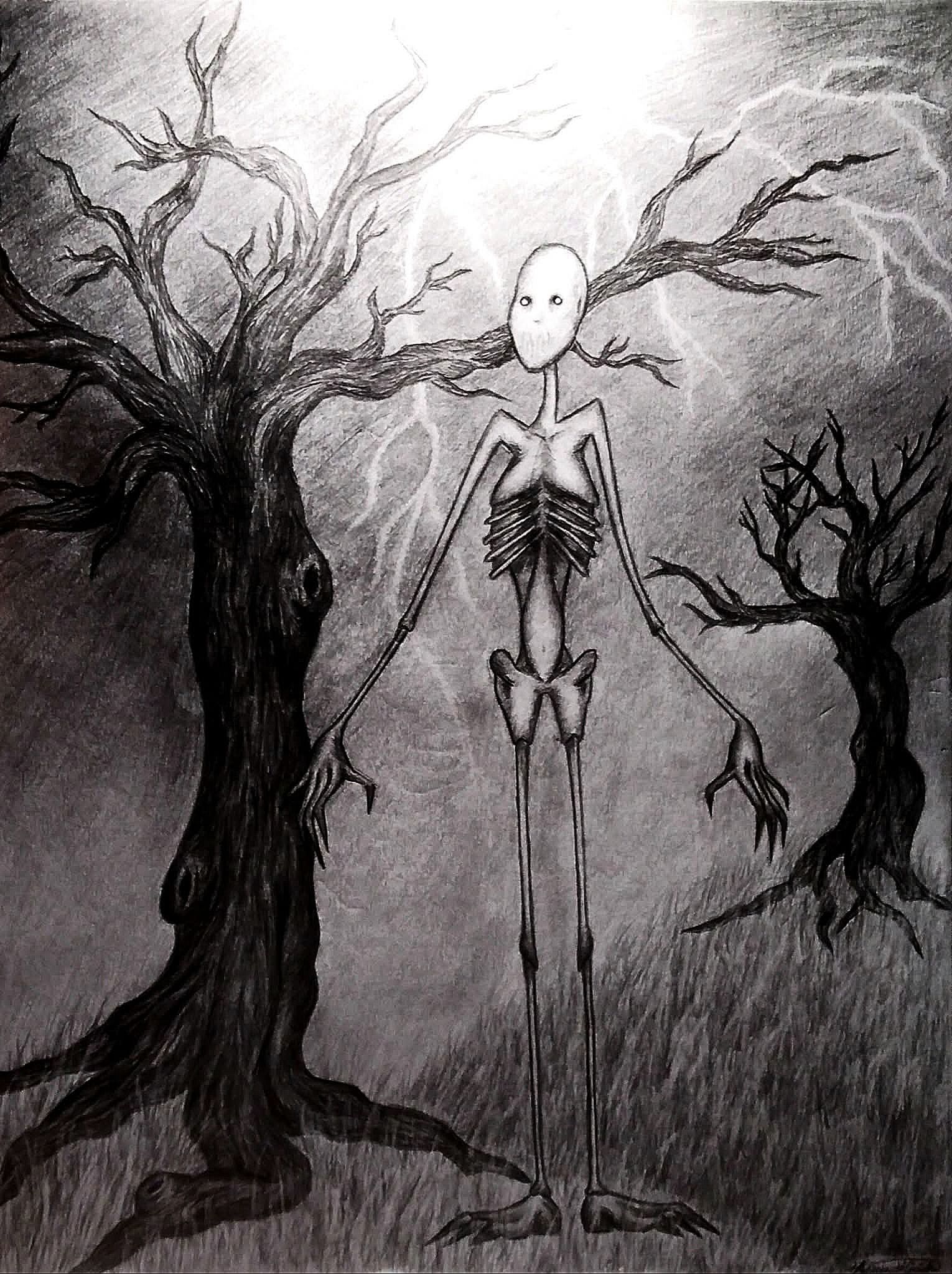
THE OUTSIDER
Belonging, on the other hand, was something she let go of. “I was treated as a freak and outsider from an early age.” That early desire to fit into a scene eventually gave way to independence. Creative spaces came with constraints, expectations, and control she had no interest in accepting.
“I had to become comfortable in walking alone.”
When she did begin sharing her work, it wasn’t to join something. It was to exist alongside it, on her own terms. After a while, I found the environment ill-fitting, constraining, and I was working overtime to undo the censorship that was being enforced by leadership within these communities. Paired with being used as a workhorse for others to reap personal benefit from, I had enough and left.
So she went looking for a crowd whom she felt might resonate-the goth/alternatives-which led her to GACC. Goths Against Cancel Culture. She picked it because she read what they were about and felt such a breath of relief that she wasn’t the only one.
Felt like finally finding a home.
THE PUSH
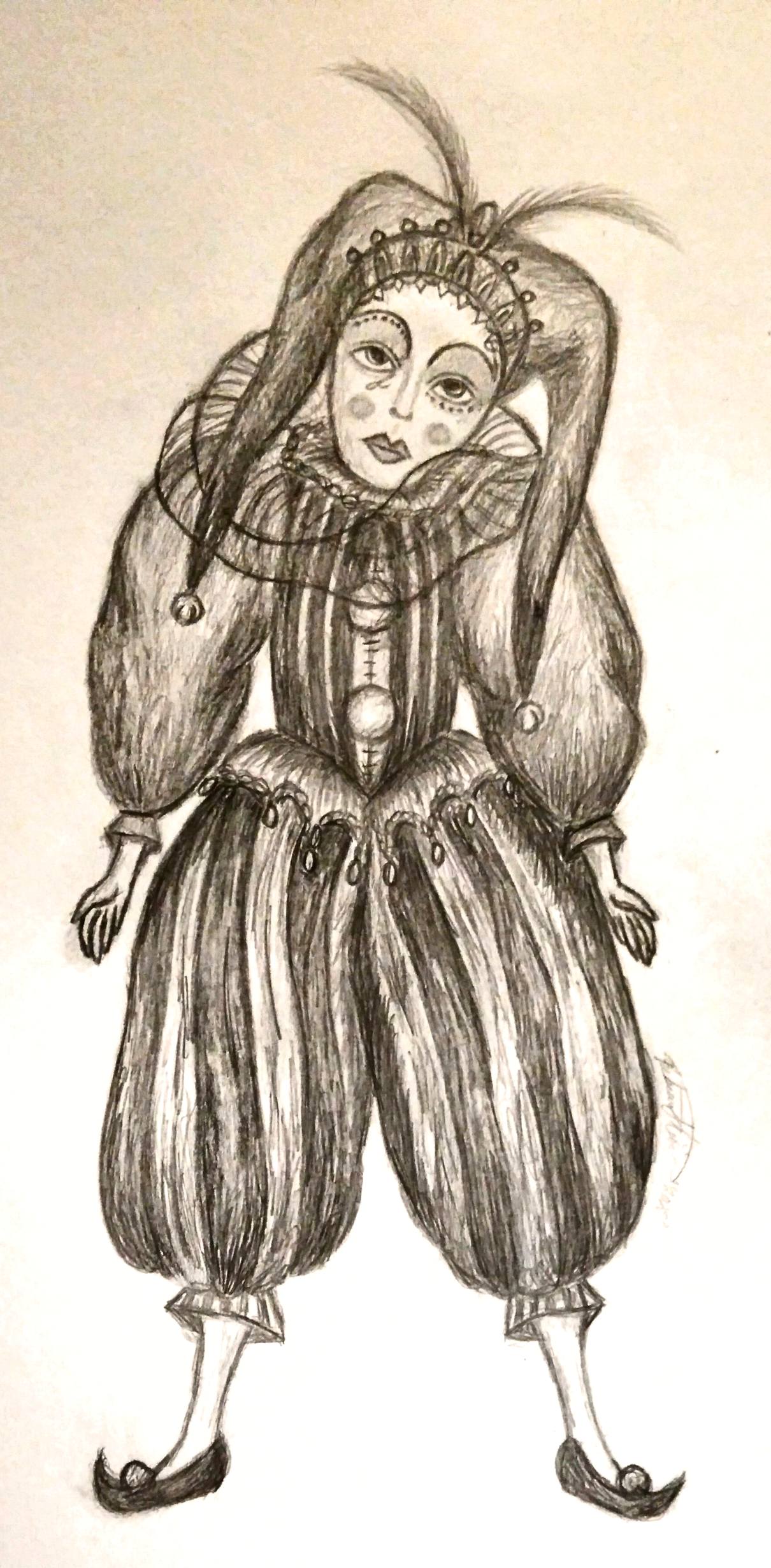
Publishing wasn’t part of the plan. For a long time, she resisted it entirely. The industry felt inaccessible, shaped by connections and gatekeeping. Even when opportunities appeared, she turned them down. “I didn’t think it worthy.”
That changed through experience. After becoming deeply involved in a poetry community, rising into leadership, and eventually encountering the realities behind the scenes, the environment shifted from creative to restrictive. “Being muzzled and censored. having to fight against the rest of the admin team to not silence others.”
So she left.
What followed wasn’t a calculated career move, but a reclaiming of control. She stepped into publishing on her own terms, handling everything herself. “That knowledge that I could just handle all the formatting and design work. was like relighting the match from my dream when I was younger.” It wasn’t about exposure.
“I am not doing this to really spread my work. I am doing it for the love of creation and helping others see their works come to life as well, without getting the reach around garbage treatment too many others give.”
THE MIND PENDULUM
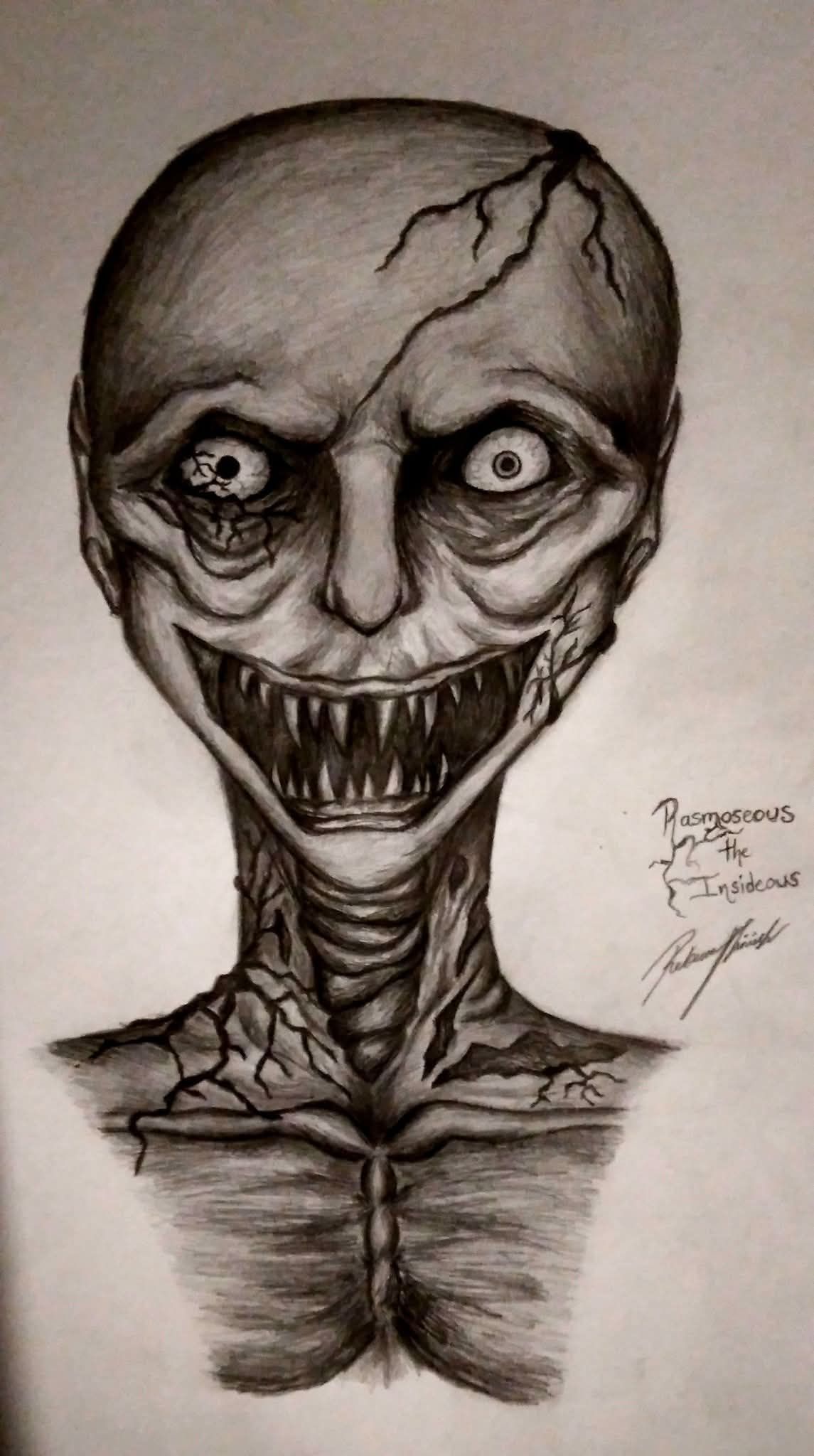
As the band’s name and Carl Jung’s quote discusses. Sense and nonsense are what drive the creative process. Trying to understand the world around you is the pull. There’s a line between sense and nonsense that runs through everything Rebecca creates as well.
And she walks it intentionally. “Anything I do not understand, I must figure out. It consumes me until I understand it inside and out.” Once she does, she reshapes it, bending reality just enough to make something new feel believable.
“One must have a deep-seated understanding of reality, to convincingly break it.”
THE WORK
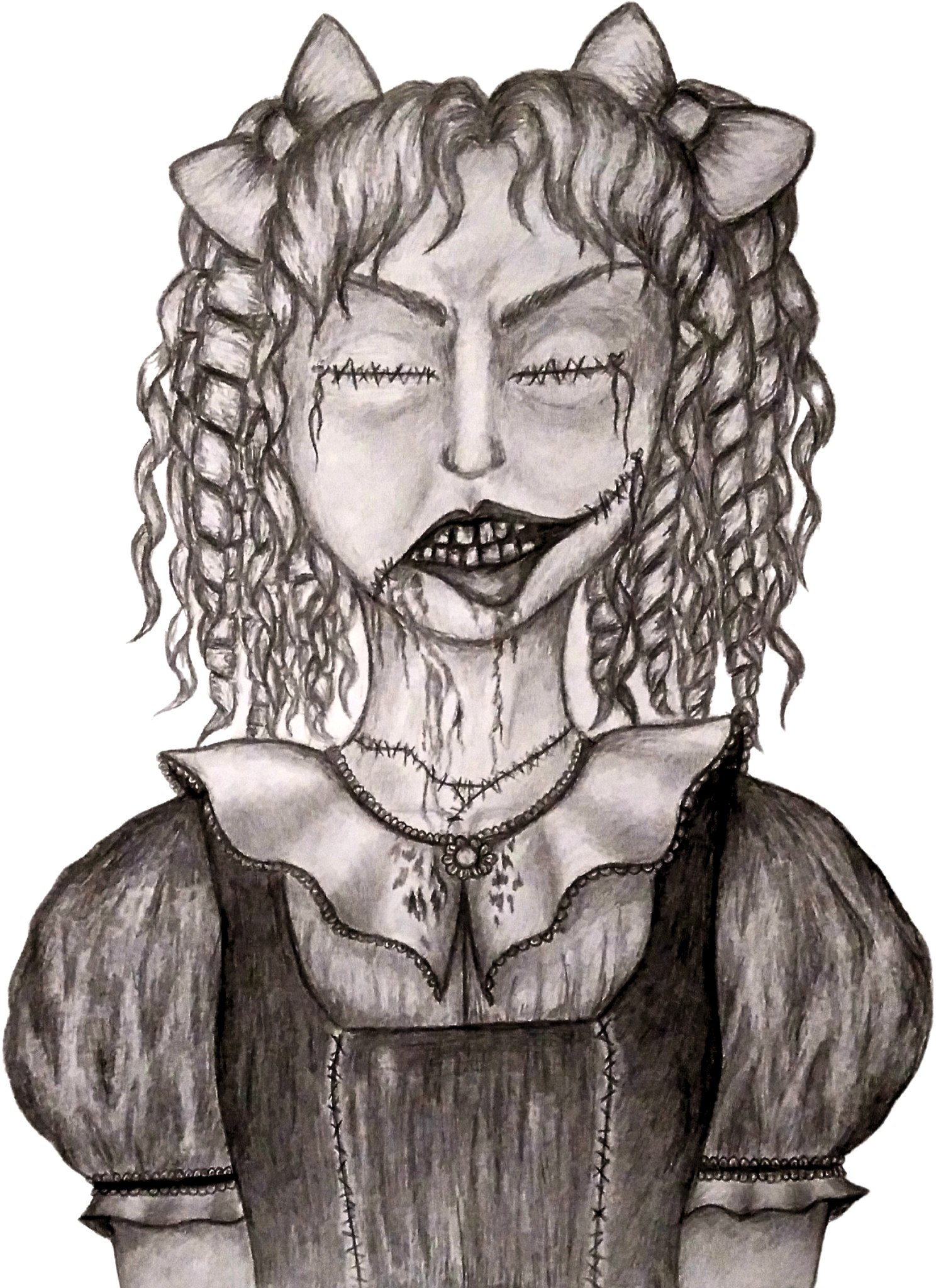
That tension between control and immersion carries into how she combines visual art with writing. The pairing isn’t stylistic. It’s necessary. “Some characters demand to be seen, not just described.”
While her writing can narrow interpretation and guide the reader toward a specific experience, certain images require form. When that happens, the visual element doesn’t expand meaning. It defines it.
A “this is exactly what you are experiencing” feel. Less ambiguity. More precision. That precision extends to emotion.
Hinish doesn’t leave feeling up to chance. Each piece is built with intent, whether it’s horror designed to create sustained unease or more personal work aimed at specific emotional states. “I rarely, if ever, do not have a clear and direct emotion I aim to extract from my readers.”
In her horror, the goal isn’t cheap shock. It’s tension that lingers. The sense of being watched. The subtle erosion of safety in familiar spaces. “I want to make you feel like you are watched and maybe even unsafe in your own dwellings.”
In her nonfiction and poetry, the emotional target sharpens. Dread. Anxiety. Helplessness. Fear. Anger. Love. Hope. Each one is deliberate, controlled, and delivered with clarity.
And unexpectedly, that control has allowed her work to reach beyond the audience it seems designed for.
“We all dance with the shadows.”
Certain themes continue to resurface, intentionally. Anxiety takes shape as something external. Emotions become entities. Forces that consume, distort, and overwhelm. “I speak a lot about anxiety and being consumed by various entities. most of which are personifications of emotions.”
In her first book, madness becomes the throughline.
“I wanted the reader to feel discombobulated, uneasy, unsafe, and without any direction.” Not as an idea. As an experience.
Despite the intensity of her work, her focus isn’t on changing direction. It’s on refinement.
“I am in a constant state of refinement. remaining static runs an itch under my skin.”
She isn’t experimenting for the sake of it or chasing new trends. When she finds a path that works, she commits to it fully. “What I have found. suits me exceedingly well.”
Growth, for her, is about sharpening, not abandoning.
THE ORIGIN
For someone so focused on the unknown, the place she would go in time and place, given the chance, is something grounded and real. A place that inspires her and fills her with hope.
A moment between her parents, early in their lives. Sitting together, talking for hours, standing at the beginning of everything in their lives that would follow.
“I want to somehow be able to go up to them. and reassure them that everything will work out.”
Not to change anything.
Just to witness it.
To hold onto something certain in a world that rarely is.
WHERE TO FIND REBECCA’S WORK
– The Book Morbid Machinations of a Mad Mind
Mind Pendulum thrives where voices like Rebecca’s emerge-artists who refuse the script, disrupt the narrative, and create without permission. We are building a collective where truth, art, and rebellion feed each other.
Music for the Subconscious.